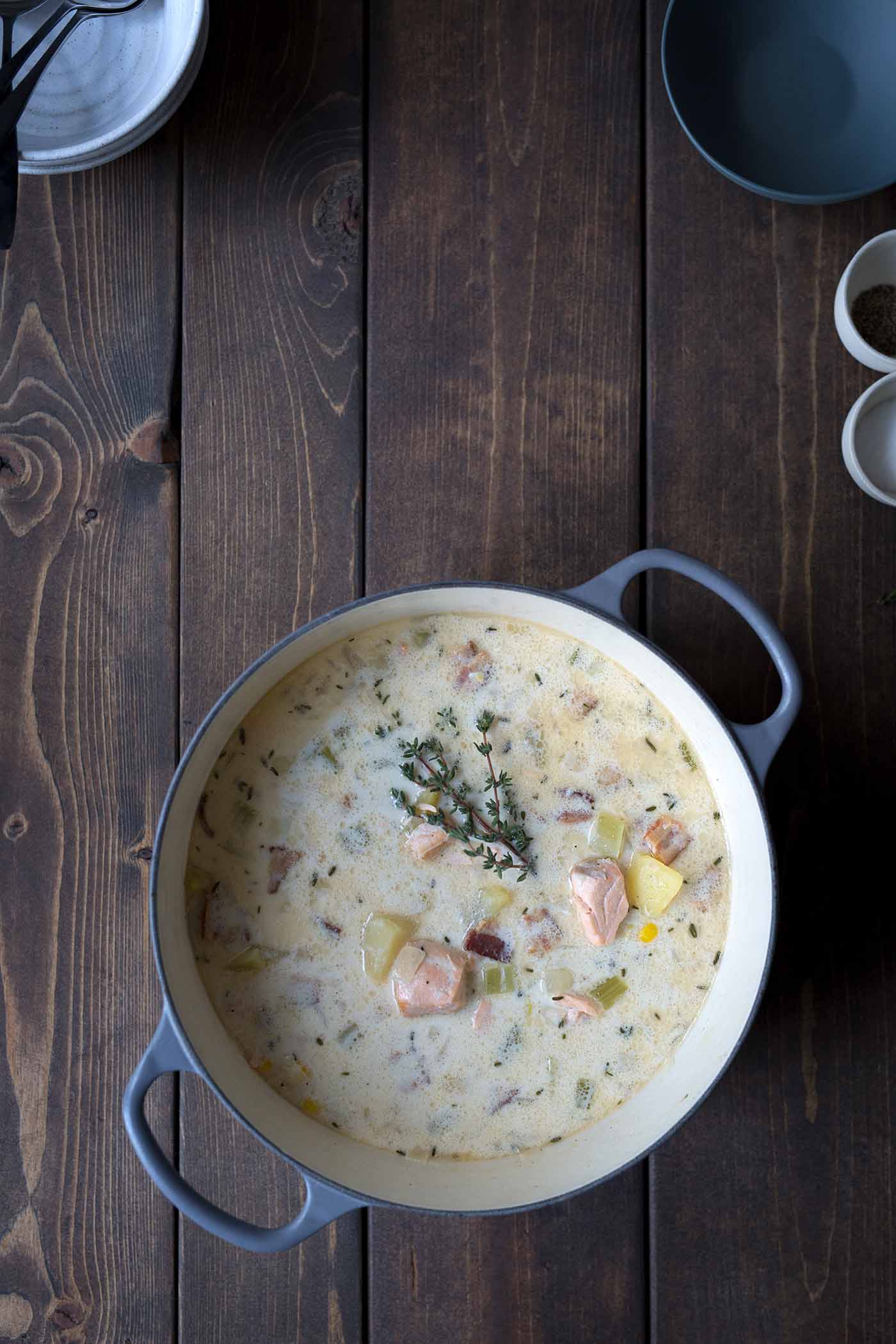
There are few dishes that deliver pure comfort, hearty satisfaction, and incredible flavor with as much ease as a well-made chowder. And when that chowder features the rich, buttery taste of salmon, it elevates the experience even further. Forget the myth that gourmet meals require hours of slaving in the kitchen; our Super Creamy Salmon Chowder: A Quick and Comforting One-Pot Meal is designed to be effortlessly delicious. This recipe focuses on creating an easy one-pot salmon chowder that not only tantalizes your taste buds but also makes brilliant use of inexpensive or leftover fish, transforming humble ingredients into a luxurious meal.
Imagine a velvety broth, studded with tender potatoes, sweet aromatics, and succulent pieces of salmon, all coming together in a single pot. This isn't just a recipe; it's a testament to smart cooking – delivering a decadent, seafood-rich dish without the fuss. Whether you're a seasoned chef or a kitchen novice, this approachable method ensures a creamy, flavorful salmon chowder every time.
From Restaurant Complexity to Home Comfort: The Evolution of Salmon Chowder
The history of chowder is deeply woven into the fabric of New England's culinary heritage, tracing its origins back to the mid-18th century. What began as a simple, sustenance-driven stew of dried fish, preserved meats, and hardtack biscuits, simmered in water, has gracefully evolved into the dairy-rich, potato-laden comfort food we cherish today. For many, fish-based chowders hold a special, nostalgic place.
Consider the professional kitchen, where culinary artistry often means elevating humble ingredients through intricate processes. Take, for instance, the genesis of a high-end fish chowder, born from the necessity to utilize every scrap of valuable fish, be it cod, striped bass, or salmon. Such a creation might involve painstakingly crafting a rich fumet from fish heads and bones, subtly infused with onions, celery, bacon rinds, and fennel. Small, precisely cut cubes of potato and celery could be gently simmered in milk, then bound with rendered salt pork lardons and a splash of heavy cream, reduced with additional aromatics. The fish itself would be added at the very last moment, ensuring it was just barely cooked through, flaky, and tender, before being garnished with homemade oyster crackers. This elaborate dance, while yielding a dish of unparalleled richness and depth, is, by its very nature, an exercise in complexity – a pursuit of that final, elusive 10% of perfection that is largely impractical for the home cook.
Fortunately, the true spirit of chowder-making for the home kitchen lies in its simplicity. We can capture 90% of that restaurant-quality flavor with only a fraction of the effort, embracing a one-pot salmon chowder approach. This method prioritizes ease, deliciousness, and the smart utilization of inexpensive or leftover fish, proving that satisfaction doesn't require complication.
The Essential Elements of a Perfect One-Pot Salmon Chowder
Crafting an exceptional salmon chowder at home hinges on understanding the role of each core ingredient and how they contribute to the final creamy, flavorful profile.
Building the Flavor Base: Bacon or Salt Pork
The journey to a deeply flavorful chowder begins with rendering either sliced bacon or salt pork. This initial step isn't just about cooking; it's about extracting fat to create a foundational layer of savory richness. A clever trick to ensure perfect rendering is to start by covering the pork with a small amount of water. As the water simmers, it gently kickstarts the rendering process, preventing the pork from burning. By the time the water evaporates, the pork is perfectly prepped to melt off its fat in earnest, yielding crispy bits and a delicious rendered fat. The choice between bacon and salt pork is purely personal; bacon offers a smokier profile, while salt pork lends a more subtle, porky savoriness.
Aromatics and Thickening
Once the pork has done its duty, the rendered fat becomes the perfect medium for sautéing your aromatics. Chopped onion and celery are the classic duo, providing a sweet, earthy counterpoint to the richness of the pork and salmon. Sauté them until they're fragrant and softened, but not browned, allowing their delicate flavors to shine.
Next comes a debated but incredibly effective ingredient: flour. While some purists insist on flour-free chowders, relying solely on potatoes and reduced dairy for thickening, incorporating a couple of tablespoons of flour (after sautéing the aromatics) creates a stable roux. This roux not only lends a silky body to your chowder but also helps prevent the dairy from separating, ensuring a consistently creamy and smooth emulsion. Stir it in for a minute or two to cook out the raw flour taste before adding liquids.
The Creamy Core: Potatoes and Dairy
No chowder is complete without hearty potatoes. Starchy varieties like Russets will break down more, contributing to a thicker, creamier broth, while waxy potatoes such as Yukon Golds or new potatoes hold their shape better, offering delightful textural contrast. Cut them into small cubes for even cooking. Simmering the potatoes directly in the broth, often with milk or a mix of milk and cream, allows them to release their starch, further enhancing the chowder's body and richness.
Dairy, of course, is paramount. Whole milk forms the backbone, while a generous splash of heavy cream adds that luxurious, velvety mouthfeel that is the hallmark of a truly satisfying chowder. The cream should be added toward the end of cooking to prevent curdling and to preserve its richness.
Mastering Your Salmon: Tips for the Best Texture and Flavor
The star of our show, the salmon, requires a little finesse to ensure it shines without becoming dry or tough. This is where the "inexpensive or leftover fish" aspect truly comes into play.
Choosing and Preparing Your Salmon
One of the beauties of this salmon chowder recipe is its adaptability. You don't need prime cuts of fish. Inexpensive or leftover fish scraps, tail pieces, or even the thinner ends of fillets that might otherwise be overlooked are perfect. Salmon is an excellent choice due to its rich flavor and relatively firm, flaky texture when cooked properly. Whether fresh or previously cooked, simply cut it into bite-sized chunks or flake it if it's already cooked.
The Golden Rule: Prevent Overcooking
This is perhaps the most critical tip for any seafood chowder. Salmon, like most fish, cooks very quickly. If added too early, it will become dry, tough, and lose its delicate flavor. The secret to perfectly tender, succulent salmon is to add it towards the very end of the cooking process. Once your chowder base (potatoes, aromatics, dairy) is simmering and almost ready, gently stir in the salmon pieces. Allow them to poach in the hot broth for just 3-5 minutes, or until they are barely opaque and flake easily with a fork. If you're using pre-cooked salmon, it needs even less time – just enough to warm through.
Customizing Your Chowder: Versatility in Every Spoonful
One of the most appealing aspects of an easy one-pot salmon chowder is its incredible versatility. While the core recipe provides a comforting foundation, there are countless ways to make it uniquely yours, adapting it to your taste, pantry, and seasonal availability.
Super Creamy Salmon Chowder: A Quick and Comforting One-Pot Meal with Added Flair
- Vegetable Boost: Enhance the nutritional value and texture by adding other vegetables. Sweet corn (frozen works wonderfully), diced carrots, peas, or finely chopped bell peppers can be added with the potatoes. A handful of fresh spinach or kale can be stirred in at the very end until just wilted.
- Herbaceous Notes: Fresh herbs truly brighten a chowder. Dill is a classic pairing with salmon, offering a fresh, anisy note. Parsley and chives also work beautifully as a fresh garnish or stirred in just before serving.
- Spice it Up: For a touch of warmth or a gentle kick, consider a pinch of cayenne pepper, a dash of smoked paprika for depth, or even a very small amount of finely diced jalapeño.
- Dairy Alternatives: While heavy cream offers ultimate richness, you can adjust the dairy for a slightly lighter chowder. Half-and-half or even evaporated milk can provide creaminess, though the texture will be less decadent. For an extra rich twist, a spoonful of cream cheese can be whisked in at the end.
- Garnishes Galore: Beyond the traditional oyster crackers (which are highly recommended for their texture and slight salinity), consider a sprinkle of crispy bacon bits, a drizzle of high-quality olive oil, a squeeze of fresh lemon juice to brighten the flavors, or a sprinkle of flaky sea salt.
A Note on Freezing
While this salmon chowder is undeniably delicious, it's generally not recommended for freezing. The dairy components tend to separate and take on a grainy texture upon thawing and reheating, and potatoes can become mealy. It's best enjoyed fresh, ideally within 2-3 days, stored in the refrigerator.
Conclusion
From the intricate preparations of a fine dining establishment to the heartwarming simplicity of your own kitchen, the journey of chowder reveals its enduring appeal. This easy one-pot salmon chowder recipe distills centuries of tradition into a modern, accessible format, proving that an incredibly creamy, satisfying, and delicious meal doesn't have to be complicated. It's the perfect solution for transforming inexpensive or leftover fish into a luxurious, comforting dish that feels like a treat any night of the week. So, gather your ingredients, fire up that single pot, and prepare to indulge in a bowl of pure, unadulterated comfort.
